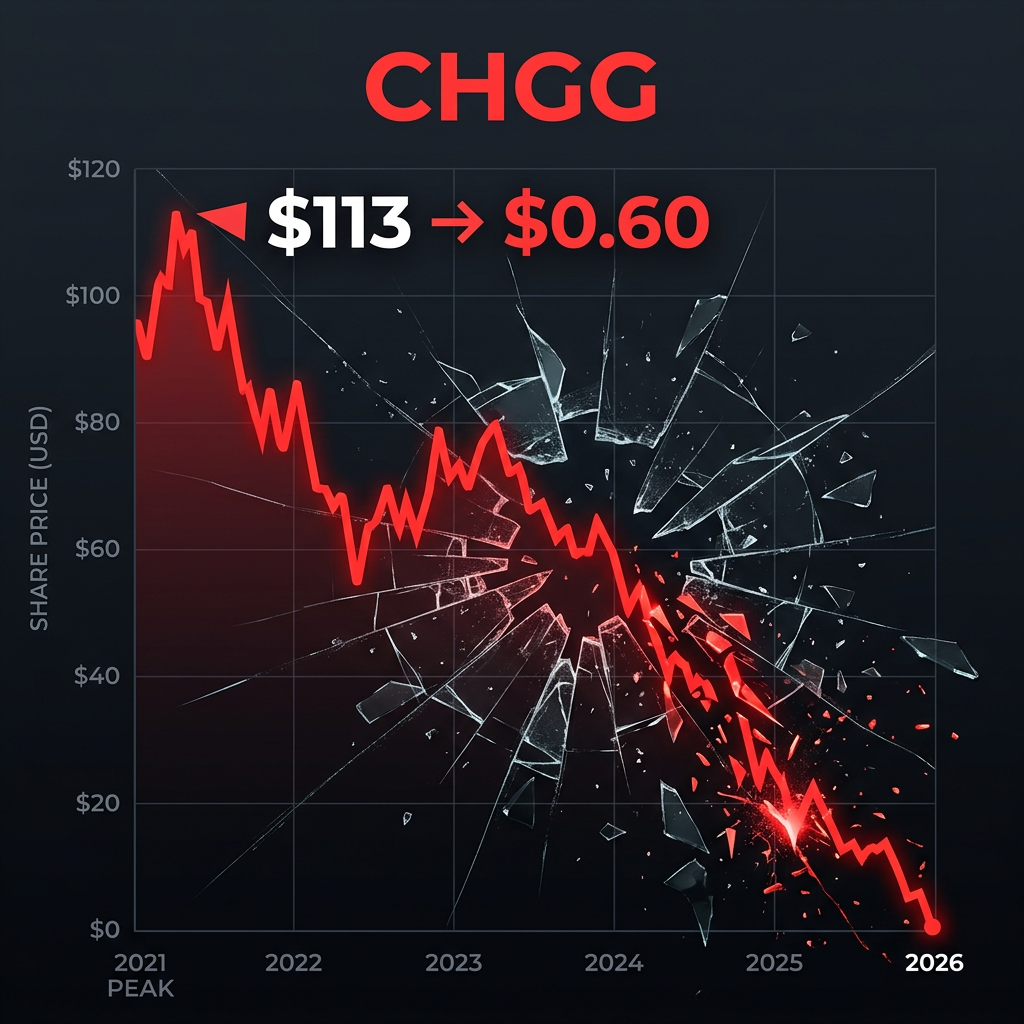
In February 2021, Chegg’s stock peaked at $113.51 per share. Students lined up to pay monthly fees for homework help, textbook rentals, and step-by-step study guides. Wall Street loved it. The company was worth nearly $14.7 billion.
By April 2026, the stock was trading at roughly $0.60.
Not a 50% correction. Not a bear market haircut. A 99% collapse.
What Happened?
ChatGPT launched in November 2022.
Within months, students discovered they could get a better, faster, more personalized explanation — for free — from an AI chatbot than from Chegg’s $19.95/month subscription.
The business model didn’t erode. It evaporated.
The numbers tell a story that should make every business leader pause:
- 2025 full-year revenue: $377M — down 39% year-over-year
- Q4 2025 revenue alone: $73M — down a staggering 49% YoY
- Workforce cut: Over 56% of employees let go in 2025
- NYSE delisting notice received for falling below minimum price thresholds
- Core homework/study business: Being phased out entirely
Chegg didn’t get disrupted because it was poorly run. It got disrupted because the entire premise of its business — charging students for access to knowledge — became obsolete the moment AI made that knowledge free, instant, and infinitely patient.
This Was the Writing on the Wall — In 2023
What’s remarkable is that Chegg itself saw it coming.
In May 2023, CEO Dan Rosensweig made a rare admission on an earnings call: “In the first part of this year, we saw no impact from ChatGPT. In the second part, we saw an impact.”
Chegg’s stock dropped 48% in a single day after that call.
The market understood what the admission meant: when a company’s core product is “answers to questions,” and AI gives better answers for free, the product is dead.
The Broader EdTech Bloodbath
Chegg wasn’t alone in the carnage. The ripple effects hit the entire sector:
- Coursera saw its stock drop over 10% as AI threat headlines mounted
- Traditional tutoring platforms scrambled to add “AI features” rather than rethink their models
- Physical textbook publishers began accelerating digital pivots years too late
- A 2025 NPR study found that 26% of teenagers now use ChatGPT regularly for schoolwork — and that number is climbing
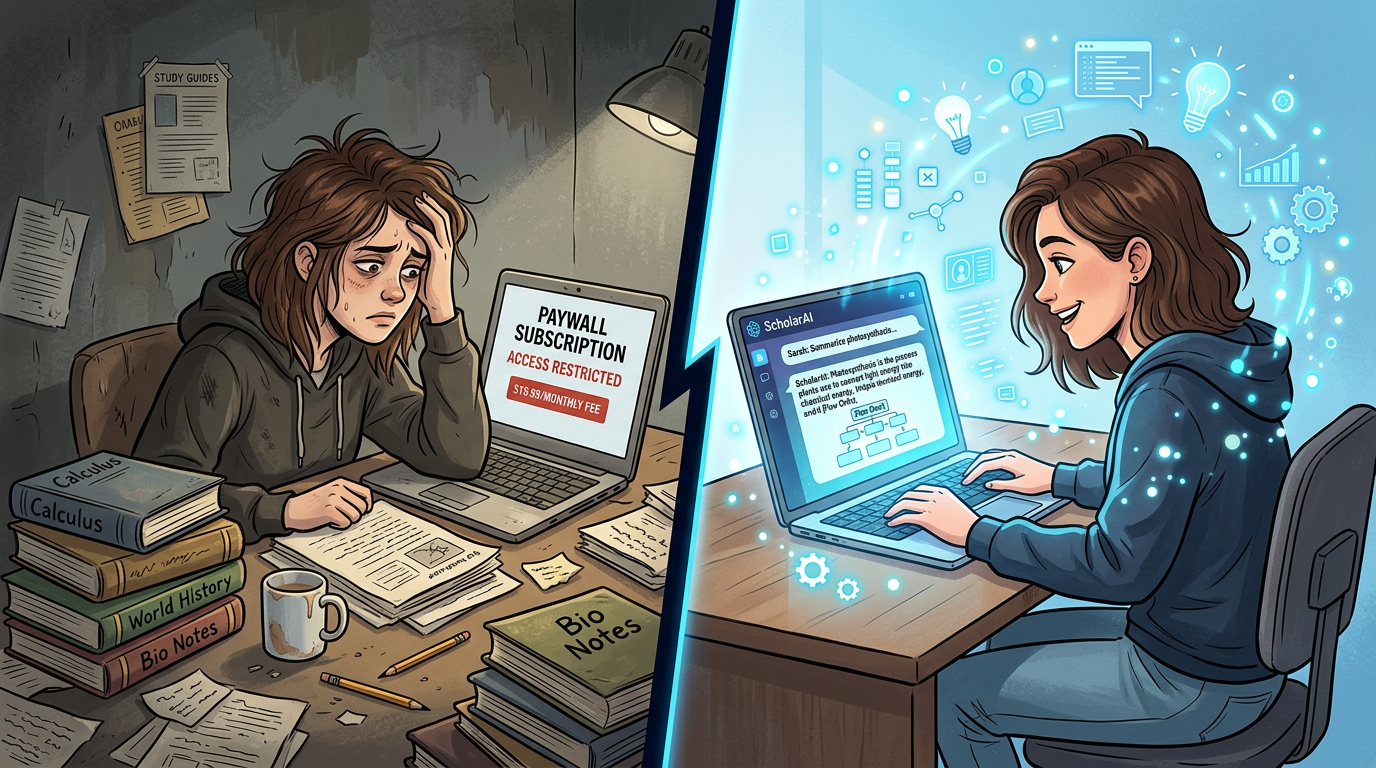
The paywall-for-knowledge model — the entire foundation of how EdTech was monetized for two decades — was built on scarcity. AI made knowledge abundant. The business model had nowhere to go.
Is There Life After Death?
Here’s what most people miss in the Chegg story: the company isn’t giving up.
They’re pivoting hard — and the pivot is actually interesting.
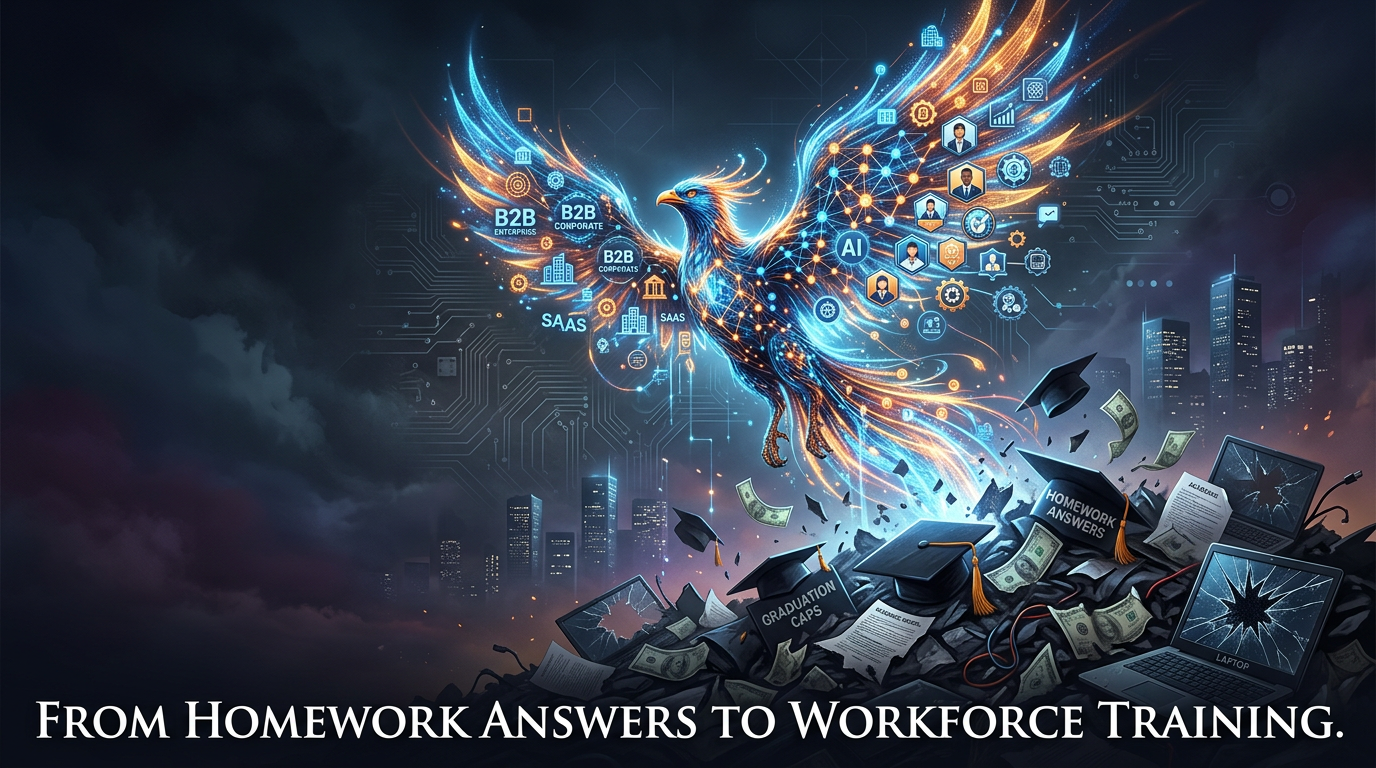
Chegg is rebuilding around “Chegg Skilling” — a B2B workforce training platform that integrates its Busuu language learning platform with job-oriented upskilling for frontline workers. Think enterprise contracts, AI-powered language learning, and professional certification — not homework answers.
Early results show double-digit growth in this new segment, with a target of ~$70M in skilling revenues by end of 2025.
They’re also cutting deep. Non-GAAP operating expenses are being slashed from $536M in 2024 to below $250M by 2026 — nearly halved — to create a lean foundation for the new model.
The $40B+ global workforce training market is a very different battlefield than student homework help. Whether Chegg can reinvent itself to compete there remains an open question. But the attempt itself is instructive.
The Lesson Every Business Leader Must Internalize
Chegg’s collapse is not a story about a bad company.
It’s a story about what happens when your moat is access to information — and AI removes the moat.
Ask yourself the uncomfortable question about your own business:
“If AI made our core value proposition free and frictionless, what would be left?”
If your answer is “not much,” you’re not in the EdTech industry. You’re in the same boat Chegg was in — you just haven’t seen the iceberg yet.
The companies that survive the AI era won’t be the ones that charge for information. They’ll be the ones that deliver transformation — outcomes, accountability, human connection, and expertise that AI can assist but not replace.
Chegg charged for answers. The future belongs to those who deliver results.
AI is not eating the world. It’s eating every business model built on artificial scarcity. The businesses built on genuine, irreplaceable value? They’re going to be just fine.
What industry do you think is next to face a Chegg-style reckoning? Drop your thoughts below — I’d love to hear where you see the next disruption coming.
Data sources: Chegg Q4 2025 Earnings Release, CNBC, NPR, Macrotrends, Yahoo Finance, Seeking Alpha